
Arkane Director Defends Palworld Amid Pokemon Comparisons
Palworld survival game developer Dinga Bakaba counters Pokémon rip-off and lazy-game claims, praising its ambitious design, systems, and creative Pals.
The internet loves a good feud, but sometimes it forgets to actually play the game involved. That seems to be exactly what happened with Palworld back in early 2024, as hordes of players argued over whether Pocketpair's monster-catching hit was a shameless Pokemon rip-off or something genuinely special. Now, years later, one senior developer has stepped up to offer a much-needed voice of reason, and his breakdown remains strikingly relevant.
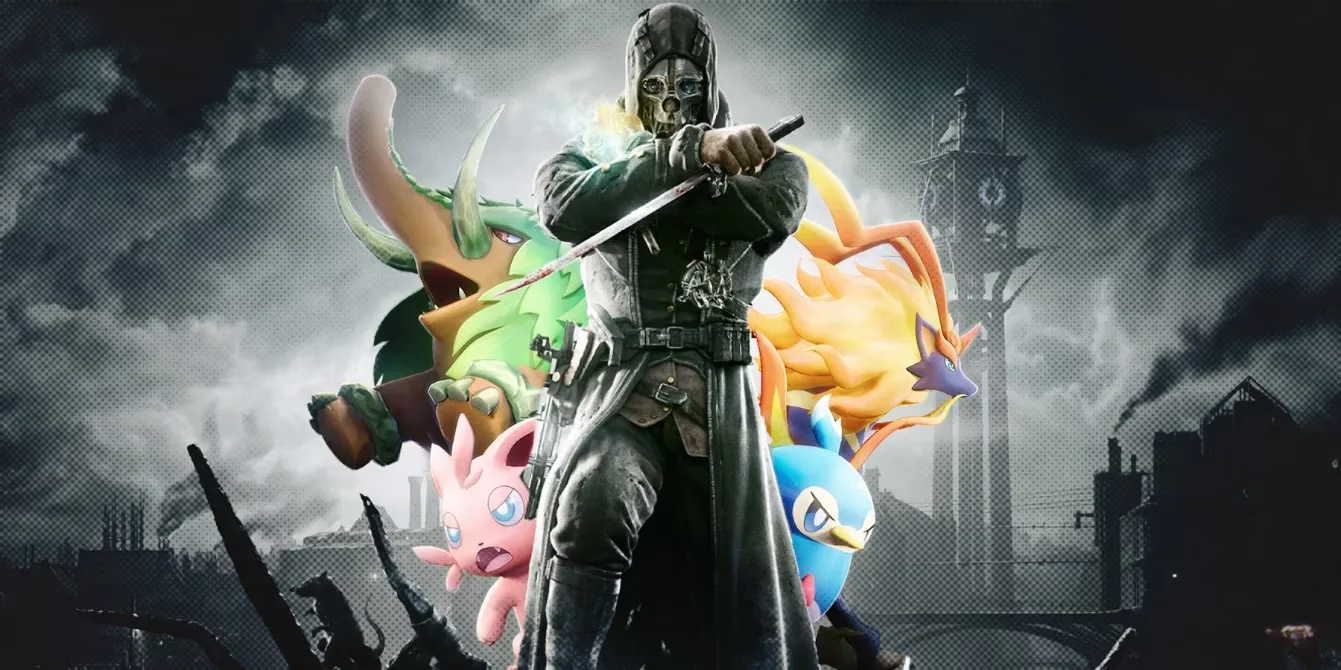
Dinga Bakaba, the studio director and co-creative director at Arkane Lyon, knows a thing or two about making ambitious games. After all, he helped shape the Dishonored series, which is hardly a stranger to inventive mechanics. This makes his extensive social media thread on Palworld particularly interesting. He didn't simply say the game was fine. Instead, he delivered a detailed analysis spanning twenty-one posts and more than two thousand words. That's the kind of effort you reserve for a title that genuinely deserves attention.
One of Bakaba's key points was simple but often lost in the noise. Palworld is first and foremost a survival game. It belongs in the same family as Ark and Rust, not in the Pokemon box. Yes, it features cute creatures you can catch and fight with, but it's built around survival mechanics like base-building, resource gathering, and even giving your Pals guns. That's a fundamentally different experience. Bakaba acknowledged the obvious similarities to Game Freak's franchise, yet he also noted that Pocketpair never pretended not to be a Pokemon parody. Some overlap isn't just understandable. It's par for the course.
But the most compelling part of his defense came when he addressed the dreaded "lazy" accusation. Bakaba was, in his own words, baffled by people calling Palworld lazy. He explained that creating an experience that plays well and remains accessible is no small feat, especially when a project juggles as many different systems as this one does. Think about it. You have open-world exploration, crafting, base management, creature collection, boss fights, multiplayer, and quirky humor all rolled into one package. Making those pieces work together seamlessly requires enormous effort and careful tuning. Calling that lazy is honestly a bit ridiculous.
Bakaba also dismissed claims that the character designs were churned out with AI tools. He called those allegations baseless, and given how much artistic identity shines through in the game's creature roster, it's easy to see why he felt that way. While some designs may echo familiar pocket monsters, they also have their own charm and distinct personality. Palworld's Pals are not a random collection of algorithm-generated doodles. They're clearly part of a deliberate creative vision, even if that vision includes a fair amount of cheeky parody.
Perhaps the most important point Bakaba made was about tolerance. He stated that while nobody is obligated to like Palworld, that doesn't give anyone a free pass to bash people who do. "Maybe let's just be tolerant," he concluded, adding that it's weird for a game to be called a blatant ripoff and yet feel "very unique" at the same time. That's a fair observation. The game broke records, spawned countless memes, and made survival fans and monster-taming fans talk to each other for a change. That hardly screams derivative.
Unfortunately, not everyone took Bakaba's words to heart. The online discourse around Palworld got remarkably ugly. Some developers received death threats, and Pocketpair's CEO, Takuro Mizobe, had to plead with the public to stop harassing his employees. Honestly, this sad turn of events overshadowed the actual game. In the middle of all the hatred, people forgot that a small studio had taken a wild, experimental idea and turned it into a global phenomenon. Looking back from 2026, the whole episode feels less like a simple clone debate and more like a masterclass in understanding how different genres can blend together.
So what's the real lesson here? First, context matters. Palworld wasn't trying to be a polished Pokemon killer. It was trying to be a chaotic survival sandbox with cute creatures and tons of systems. Second, effort matters. Blending all those elements smoothly is harder than it looks, and dismissing that work says more about the critic than the game. Third, maybe people should spend less time shouting about what they hate and more time enjoying what they love. Bakaba offered a thoughtful, respectful breakdown, and even if you disagree with his conclusions, you have to admire his approach. At the very least, he made people pause and think. And in gaming discourse? That's a rare and valuable thing.