
Revisiting Palworld’s Tone-Deaf Merch Tease Amidst the Pokémon Controversy
Palworld's controversial merchandise card tease drew criticism after Pokémon plagiarism allegations surfaced.
When Palworld erupted onto the scene in early 2024, the collective gasp from the gaming world was loud enough to rattle windows. It felt like the entire industry had gathered around a campfire to watch a strange chimera—a survival-crafting monster catcher that dared to wear its inspirations like a neon sign. Two years later, that campfire still burns, but the flames have shifted. What began as a curious blend of ideas rapidly tumbled into a whirlpool of accusations, and at the center of the storm sat an ill-timed merchandise announcement that many still recall with a raised eyebrow.
Pocketpair’s early access hit didn’t just borrow a concept; it borrowed eyebrows, tail shapes, and idle animations from a certain billion-dollar franchise. At first glance, the so-called “Pals” seemed like affectionate nods. Spend thirty hours hunting them, however, and the nods morph into uncomfortable winks. Some designs appeared to have been run through a photocopier that was just slightly out of toner—fuzzy enough to avoid a carbon copy, yet distinct enough to trigger a thousand Reddit detective threads. The Pokémon Company itself broke its usual silence, stating it would investigate potential intellectual property infringements. For a developer already juggling multiple Early Access titles like flaming torches, this was the equivalent of a gas leak in the workshop.
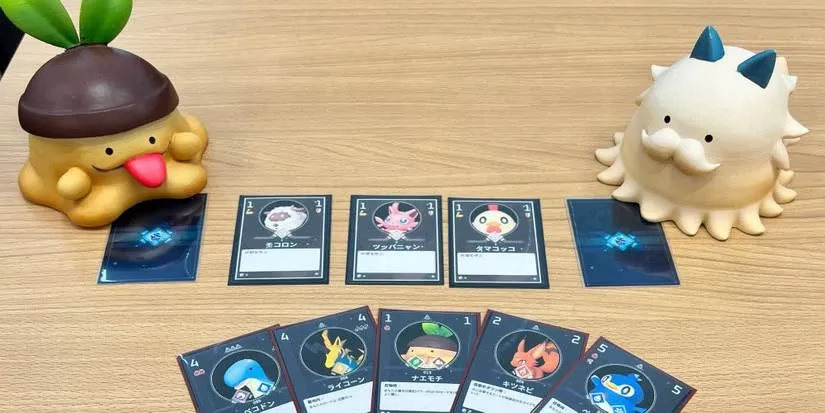
Into this powder-keg atmosphere, just three days after the launch, Pocketpair’s CEO tossed a match. A tweet teased official Palworld merchandise—a prototype trading card that screamed “Pokémon” louder than an open-mic night at a karaoke bar. No actual product existed yet; the post was a mere whisper of future plans. But announcing collectible cards while a legal giant had already unsheathed its magnifying glass felt less like ambition and more like trying to sell fire insurance while the house was already burning. It was a textbook case of tone-deafness, the sort of move that makes bystanders wonder if the captain had forgotten the ship had sprung a leak.
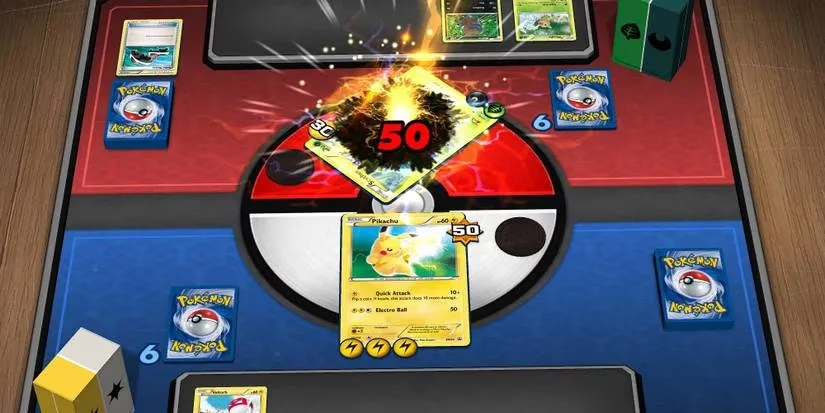
To understand why the card tease landed with such dissonance, you have to rewind to the golden age of Pokémon mania in the late ’90s. Back then, every franchise with a shred of brand recognition tried to capture that same lightning in a cardboard rectangle. Digimon had its cheaply printed cards, Harry Potter shuffled its own deck, and a dozen forgotten imitators littered schoolyards. Kids could smell a clone from across the cafeteria, yet companies never stopped trying. The Palworld card preview resurrected that old ghost—but in 2024’s hyper-litigious climate, raising that ghost felt less nostalgic and more like a dare.
None of this existed in a vacuum. Pocketpair was already a company operating like an octopus learning to play piano—each tentacle managed a different Early Access project. At the time, they had four games in various states of incompletion, with a fifth demo bearing the same “work-in-progress” stamp. Cash flow from a breakout hit can be a lifesaver, but putting merchandise on the roadmap while half your portfolio remains under construction is like a juggler adding an electric chainsaw to the act. It grabs attention, sure, but the risk of self-injury skyrockets.
Critics argued that the studio needed to pump the brakes on Pokémon-flavored inspirations and simply finish the game they had promised. The survival mechanics showed genuine spark; the base-building felt cohesive. Yet every copycat design and every premature card preview fed the narrative that Palworld was a ship built from borrowed planks. Even the most optimistic players had to wonder: why paddle toward a lawsuit?
Fast forward to 2026, and the Palworld phenomenon looks more nuanced. The game received substantial updates, fixed major bugs, and even introduced genuinely original Pal designs that distanced it from the accusations. The merchandise? It eventually materialized in modest quantities, though the trading card line never became the cornerstone the CEO’s tweet implied. Whether that was a legal retreat or simply a change of heart remains unclear. But in developer post-mortems, that January 2024 tweet often serves as a cautionary example—a reminder that when the fire alarms are ringing, one probably shouldn’t start pitching marshmallow roasts.
The lesson has aged like a barrel of fine attention. Today’s indie studios watch Pocketpair’s trajectory like a tutorial on crisis management. Timing in game development is as delicate as a soufflé, and announcing merch during an IP investigation is the equivalent of slamming the oven door. The experience didn’t kill Palworld—the game’s sheer audacity kept it afloat—but it left a noticeable scar on its reputation, one that still tingles whenever a new monster-catching title flirts too closely with iconic silhouettes.