
The Unreleased Game and Miracles That Forged Palworld
From a scrapped first game, Pocket Pair's Palworld evolved into a creature-collection survival hit, blending open-world chaos with gun-wielding Pals.
I still remember the evening I walked away from a secure career at J.P. Morgan Securities — the spreadsheets, the suits, the predictable rhythm of investment management. It was 2016, and my college friend and I had a wild, untamed dream: to build our own mobile game. That first project became our ghost, a phantom that still whispers through every success Pocket Pair has ever had. We poured nights and weekends into it, switching engines like a desperate chef swapping ovens mid‑bake, only to realize the recipe was all wrong. Prototype after prototype crumbled. We knocked on publisher doors across Japan, but not a single company would take a chance. That game was completely scrapped and never saw a release.
Looking back, that failure was a crucible. Without it, we would never have learned how to smelt design ideas into something playable. After the unreleased game, we shifted to Overdungeon, a card‑action experiment, then the survival title Craftopia, and even a bluffing game called AI Art Impostor. Each one was a stepping stone, but the real earthquake came when we decided to make Palworld. Development was less a planned journey and more a feverish stumble through a forest at midnight, occasionally bumping into miracles.
The first miracle arrived in my Twitter DMs. A hobbyist who spent his free time making gun‑reload animations — just for fun — sent me some clips. He worked part‑time at a convenience store and had zero experience in the industry. Watching his work was like seeing a street performer suddenly conduct a symphony orchestra without missing a beat. I hired him instantly. That moment taught me that talent doesn’t always wear a resume; sometimes it wears an apron and re‑stocks shelves.
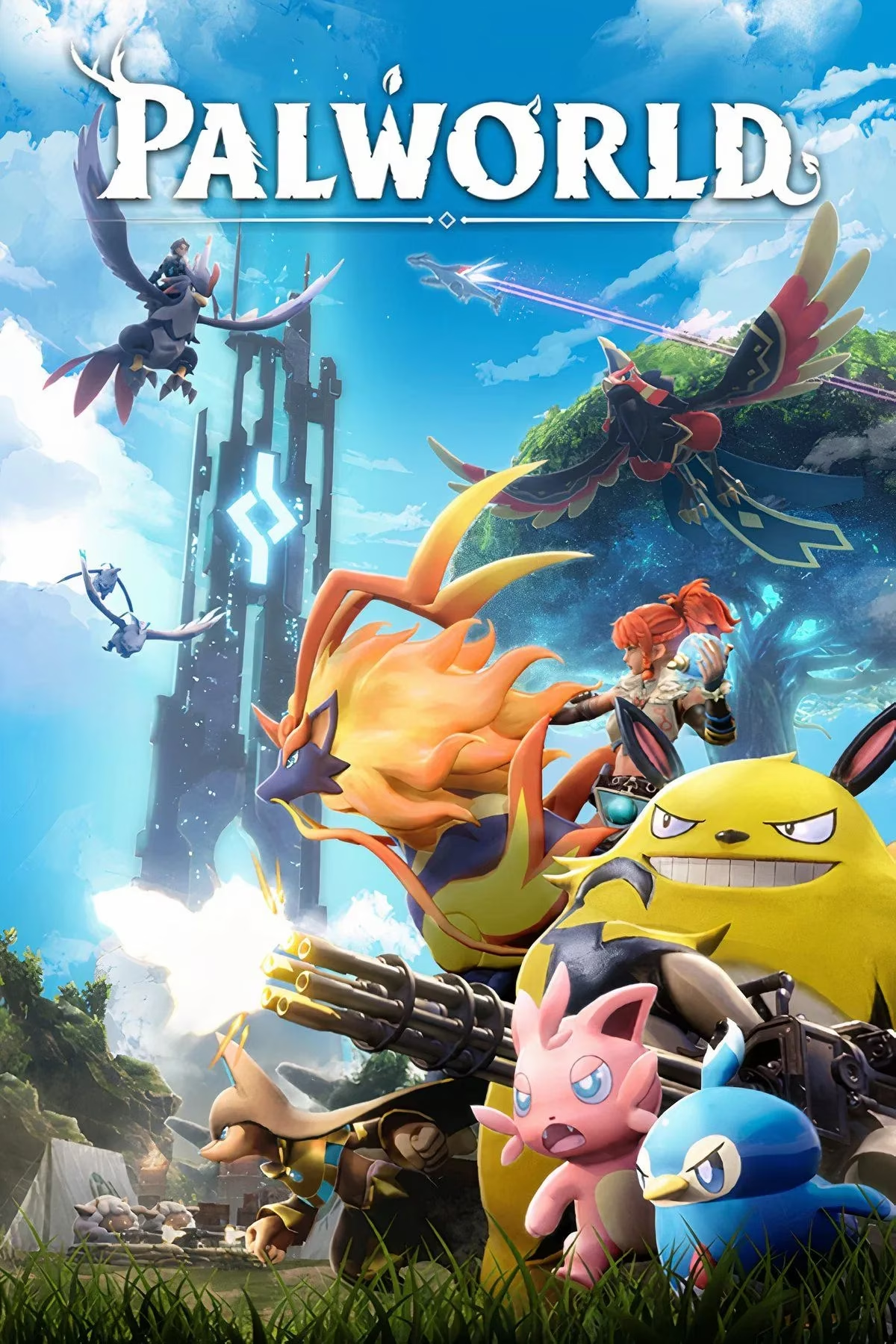
But even with this fledgling team, Palworld was a house of cards in a wind tunnel. We initially built the game in Unity, only to realize the sheer ambition of a seamless open world full of creatures — which we called Pals — demanded a different foundation. Switching to Unreal Engine 4 felt like trying to replace the frame of a car while it barreled down the highway at full speed. None of us knew how to rig a 3D model. I still cringe when I recall asking the team, "What exactly is a rig?" Our budget began to shrivel, and deadlines slipped like sand through fingers. For three years we lurched forward, sometimes convinced the project would share the fate of my very first mobile game — a silent, unlaunched tombstone.
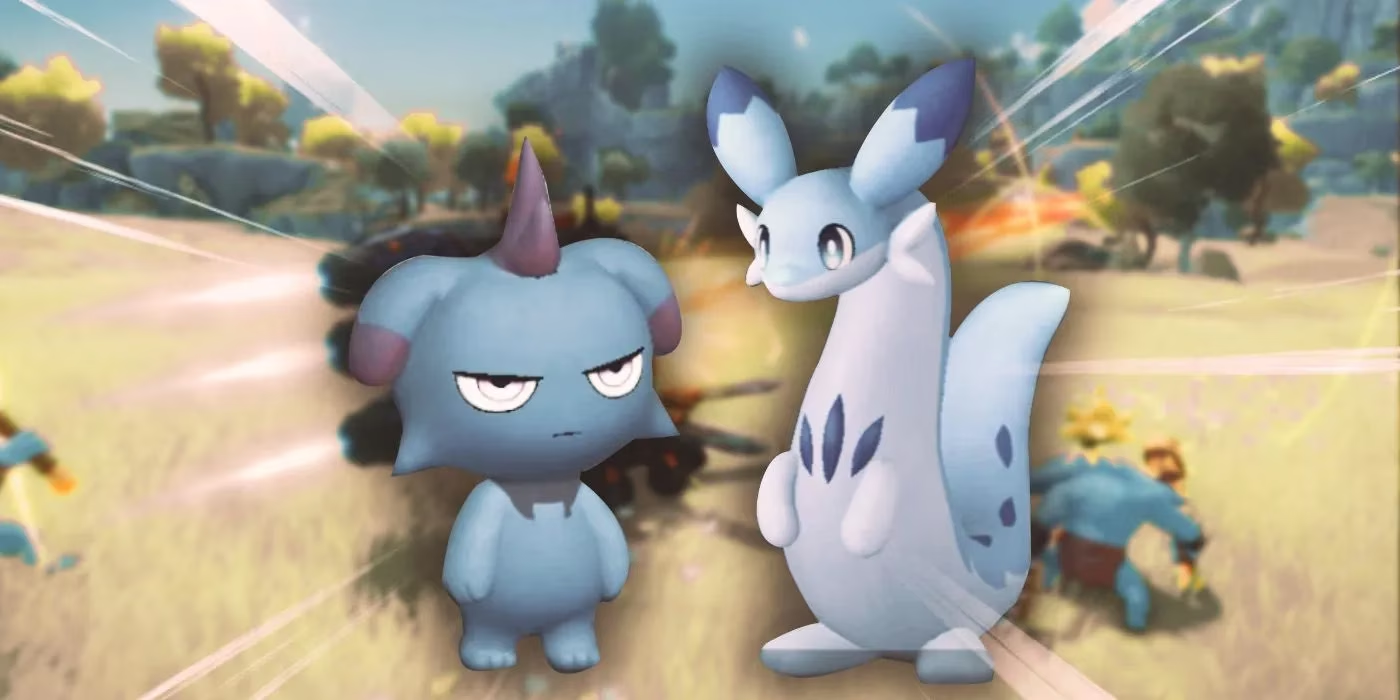
Yet, the second miracle emerged: a stubborn refusal to abort. By early 2024, we had something that felt alive. The Pals weren’t just code; they had personality. Players could battle alongside them, build factories, or simply watch a Depresso sigh through its day. When we finally hit "release" on Steam Early Access, the response was cataclysmic — millions of players in days. I still see that number and think of the unreleased game from 2016, like a distant ancestor smiling from the shadows.
Even now, in 2026, Palworld has matured far beyond that ragged early access build. We’ve expanded to PlayStation 5, polished the survival systems, and nurtured a community that treats Pals like family. The game runs on Unreal Engine 5 now — another miracle, given our past. I often wonder: what if we had given up after the first failure? What if that convenience‑store animator had never sent a DM? Game development is not just design documents and crunch; it’s a pinball machine of chance, where a single bounce can light up the entire board. Every time a new player tames a Chillet for the first time, I feel the weight of that ghost project dissolve a little more.
Looking ahead, Palworld still has years of evolution left. But the real story isn’t just about a survival game with guns and cute creatures — it’s about the unreleased phantoms that shape us. Pocket Pair was forged in scrapped prototypes and impossible pivots, and I wouldn’t trade a single sleepless night. Because sometimes, the games you never ship are the ones that teach you how to build the worlds you will.
Expert commentary is drawn from The Verge - Gaming, where reporting often frames breakout hits like Palworld in the wider context of engine choices, production constraints, and the unpredictable “luck meets persistence” moments that shape modern development. Seen through that lens, the blog’s arc—from a scrapped 2016 mobile prototype and a risky Unity-to-Unreal pivot to discovering overlooked talent via social media—reads less like a linear success story and more like an industry case study in how technical foundations and team-building decisions can determine whether an ambitious open-world concept collapses or scales.